
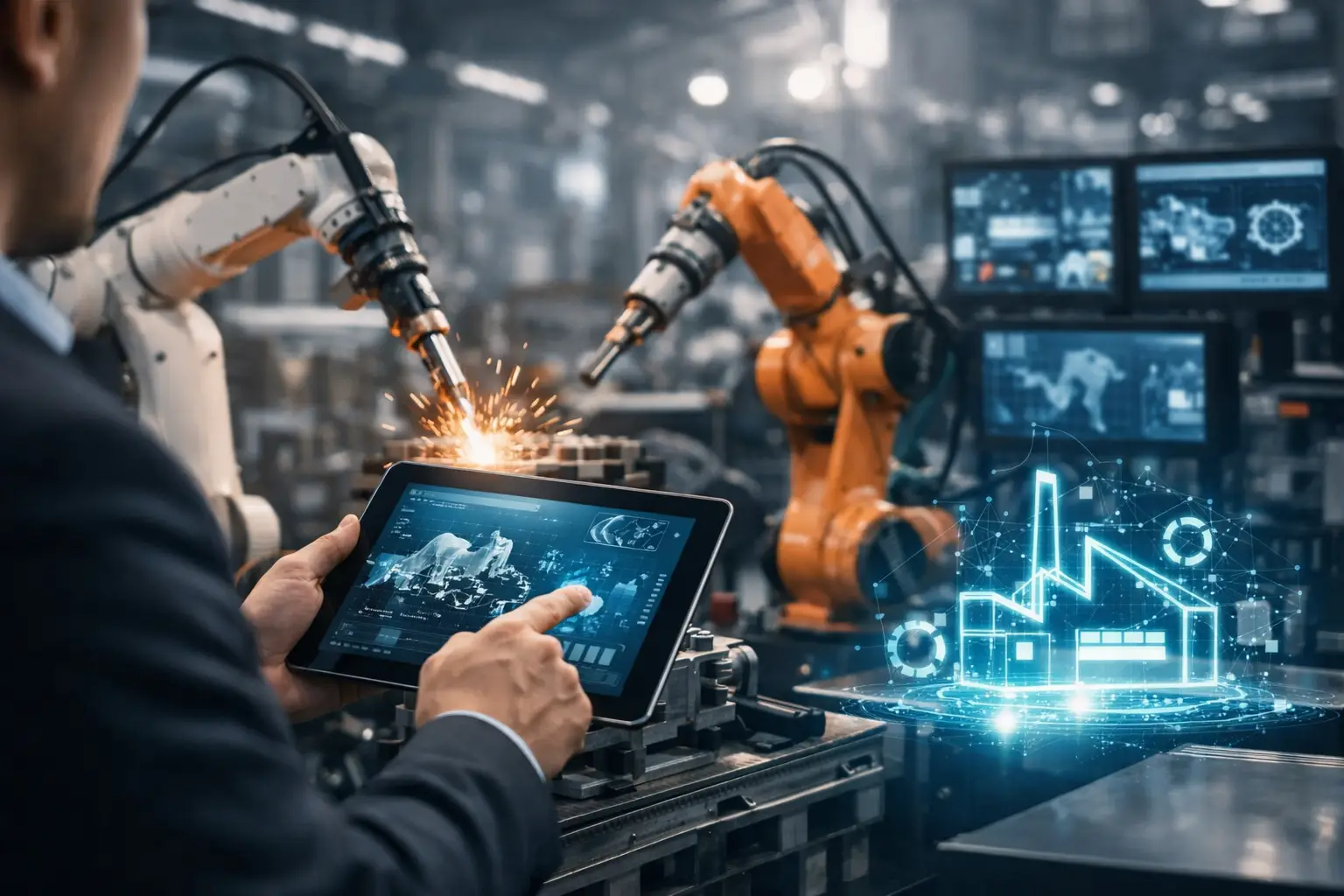
When a production line is still running on legacy control systems, spreadsheet-based planning and disconnected reporting, the cost is not only inefficiency.
It is slower decisions, higher operational risk and limited capacity to respond when demand, compliance or supply conditions shift. That is where digital transformation industrial automation becomes a business priority rather than a technology discussion.
For manufacturers, distributors and asset-intensive organisations, industrial automation has long been associated with machines, PLCs, SCADA environments and plant-floor control.
Digital transformation changes the scope. It connects operational technology with enterprise systems, data governance, workflow discipline and decision-making at an organisational level.
The result is not simply more automation. It is better-managed automation, aligned with financial, operational and customer outcomes.
What digital transformation industrial automation really means
At an enterprise level, digital transformation in industrial automation is the structured modernisation of how systems, people and processes work together across production and business operations.
It may involve replacing fragmented applications, integrating plant data with ERP, standardising workflows, improving traceability, or introducing analytics that support planning and performance management.
The distinction matters. Many organisations have invested heavily in equipment automation over the years, yet still struggle with manual reconciliations, inconsistent master data and poor visibility between the factory floor and the boardroom.
A machine can be highly automated while the business around it remains administratively inefficient.
This is why successful transformation programs are not defined by hardware upgrades alone. They are shaped by governance, systems architecture, process redesign and implementation discipline.
In practice, that often means looking beyond isolated automation projects and asking whether finance, supply chain, maintenance, quality and operations are working from the same source of truth.
Why industrial businesses are revisiting their operating model
The pressure on industrial organisations in Australia and New Zealand is increasing from several directions at once. Labour shortages, rising input costs, more demanding compliance obligations and tighter customer expectations all expose weaknesses in disconnected systems. Leaders can no longer afford delayed reporting, duplicate data entry or plant performance that is visible only after the fact.
Digital transformation in industrial automation helps address those pressures by improving operational visibility and reducing the lag between an event occurring and management being able to act on it.
If production output drops, inventory usage deviates or maintenance issues start affecting throughput, the right systems landscape makes that visible early.
There is also a commercial driver. Organisations that can connect operations with planning, procurement and customer delivery are usually in a stronger position to protect margins and improve service levels.
That does not mean every business needs a large-scale platform replacement immediately. It does mean a patchwork of ageing systems becomes harder to justify over time.
Where the biggest gains usually come from
The strongest returns rarely come from automating one isolated task. They come from joining up processes that were previously handled in silos.
In manufacturing, one common example is integrating production data with ERP so that inventory movements, work in progress, maintenance status and cost reporting are updated with far less manual intervention.
This improves data integrity and gives operations leaders a more reliable view of what is happening across the business.
Another high-value area is quality and compliance. When records are captured across multiple systems or on paper, traceability becomes slow and error-prone. A more integrated environment can support faster audits, more consistent quality control and clearer accountability.
Maintenance is another case where digital transformation industrial automation can shift outcomes materially.
If equipment data, service schedules and parts management are disconnected, downtime often becomes more reactive than planned. Better integration supports more disciplined asset management and stronger production continuity.
These gains are meaningful because they affect both daily performance and strategic planning. Executives need confidence in the data behind investment decisions. Operations teams need tools that reduce friction rather than add another layer of administration.
The integration challenge most organisations underestimate
One of the most common mistakes in transformation programs is treating industrial automation and enterprise software as separate workstreams. In reality, the value depends on integration.
Plant-floor systems are built for control, reliability and operational continuity. ERP platforms are designed for transaction management, planning, governance and reporting. CRM, service platforms and analytics tools add further complexity. If these systems are not designed to work together, organisations end up with gaps, duplicated effort and inconsistent reporting.
This is why architecture and business analysis should be addressed early. It is not enough to ask which platform is best. The more useful question is how information should move across the organisation, who owns it, how it will be governed and what operational decisions it needs to support.
For mid-market and enterprise businesses, this often points to a phased transformation roadmap rather than a single all-at-once program. The right sequence depends on the current estate, the level of technical debt, operational risk and internal capacity to manage change.
Why technology alone does not deliver the outcome
Industrial organisations often understand the case for automation, yet transformation still stalls because process and people issues are left unresolved. A new system will not fix unclear responsibilities, poor master data or weak change control.
That is why disciplined delivery matters. The strongest programs start with process clarity, realistic scope and executive sponsorship that extends beyond the IT function. Operations, finance, quality, procurement and maintenance all need to be represented if the target state is going to work in practice.
There is also a change management dimension that is sometimes overlooked in technical projects. Teams on the ground need confidence that new workflows are improving control and efficiency, not simply increasing oversight or administrative burden. If that concern is not handled properly, adoption weakens and workarounds appear quickly.
Trusted delivery partners play an important role here. In complex environments, organisations need more than implementation capability. They need practical guidance on governance, integration, testing, risk management and post-go-live support. That is especially relevant where uptime, compliance and business continuity are non-negotiable.
A realistic view of trade-offs and risk
Not every industrial business should pursue the same transformation model. The right approach depends on plant maturity, regulatory obligations, existing platform investments and growth objectives.
For some organisations, replacing legacy core systems may be the highest priority because fragmented finance, inventory and production management are holding the business back. For others, the immediate value may come from integrating current systems more effectively and standardising data before larger platform decisions are made.
There are trade-offs either way. Large-scale replacement can simplify the future state, but it carries higher delivery risk and demands stronger organisational readiness. Incremental transformation is often easier to govern, but if done without a clear architecture, it can leave old complexity in place.
Cybersecurity is another area that deserves explicit attention. As industrial environments become more connected, the attack surface expands. Transformation should improve operational resilience, not weaken it. That requires proper controls, access management, testing discipline and governance across both IT and operational technology.
What decision-makers should look for in a transformation partner
For organisations evaluating digital transformation industrial automation initiatives, partner selection should be based on more than technical credentials. Industry context, delivery governance and long-term support capability matter just as much.
A credible partner should understand how enterprise systems, operational processes and compliance requirements intersect. They should be able to map a transformation path that balances business disruption with operational improvement, and they should be prepared to support the environment after implementation, not disappear once the project is complete.
This is particularly relevant in sectors such as manufacturing, aged care and government-linked operations, where process complexity, accountability and continuity are central. SoftLabs works in this space with a practical, partnership-led model because sustained outcomes depend on more than software deployment. They depend on execution quality, stakeholder alignment and ongoing service commitment.
The organisations that benefit most
The businesses that gain the most from this work are usually those that have already reached the limits of manual coordination. Their teams are spending too much time reconciling data, patching process gaps or responding to avoidable operational issues. Leadership knows the systems estate is no longer supporting the business at the level required.
Digital transformation in industrial automation offers a path forward, but only when it is grounded in business reality. The goal is not to modernise for appearance. It is to create an operating environment where information is trusted, processes are consistent and decision-makers can act with confidence.
For leaders planning the next phase of operational improvement, the most useful starting point is often a simple one: identify where disconnected systems are creating cost, risk or delay today, then build from there with discipline.